Showing posts with label history. Show all posts
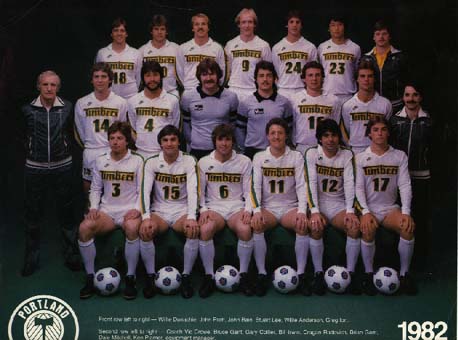
Borrowed from NASLjerseys.com
-Jason Davis

American soccer history exists, it's just sometimes in the eye of the beholder. Or, more accurately, it requires a bit of looking. Thanks to the hands-off-history approach of MLS for the first decade-plus of its existence when it came to soccer history, connections to anything pre-1996 were under-informed or absent all together.


Soccer's Near Miss in America

Monday, January 24, 2011 | View Comments
-Jason Davis

It is probably no coincidence that so many of the games we play today, particularly the team spectator sports that are now big business and cultural institutions, were codified within the span of a few decades during the second half of the 19th Century. An increase in the amount of leisure time for the people of Great Britain and the United States, one result of the Industrial Revolution taking place at the time, might have something to do with it. I'm sure that some study on the subject has attempted to narrow it down through historical study, but it's more likely that it was a complicated coming together of several social factors. Wikipedia credits the lawnmower. Because all of these sports coalesced into their recognizable forms around the same period, their respective history in the countries in which they took hold (or narrowly missed doing so) is easily traceable to a few simple decisions, crucial moments, or quirks of fate.


Embracing History

Friday, November 19, 2010 | View Comments
by Jason Davis


History, specifically American soccer history, is top of mind these days.  I'm taking a few days away from the bill-paying job, and while I'm mostly serving as a toddler's jungle gym at erratic intervals that are threatening the viability of my...male paraphernalia, I'm also doing my best to keep up with the goings-on in the soccer world (frankly, I need a 12-step program to break my addiction to my newsreader and Twitter), provide as much content here as vacation-affected motivation will allow, and visit family that deserve a modicum of my attention.


MLS Statues

Thursday, August 05, 2010 | View Comments
May 21, 2010 - Lisbon, Portugal - epa02167602 A ten-meter statue of Portuguese soccer player Cristiano Ronaldo stands in a shopping mall in Lisbon, 21 May 2010. Portugal will play in the upcoming World Cup Championship, in South Africa.
How terrible would this be if it was real?


A statue of the late American soccer pioneer Lamar Hunt will be unveiled at Pizza Hut Park tonight as part of the pre-game ceremonies for FC Dallas' friendly against Inter Milan.


Hunt's place as a driving force behind American soccer make the statue more than well-deserved (no comment on what his son is doing to that legacy). Hunt was an NASL owner, an original MLS investor, owned three MLS clubs at one point, built and paid for the country's first modern soccer stadium, and promoted the US Open Cup to the point that his name is now on the trophy. It's safe to say that American soccer isn't where it is today without Lamar Hunt as a champion.


Frankly, a Hunt statue would make just as much sense in Columbus as it would in Dallas.


The "heroic-size" statue of Hunt (of which we clearly need pictures) has me thinking about the rest of MLS. If every current MLS club was to erect a statue in honor of a figure crucial to their history, who would be immortalized in each?


Here are few quick shots at it from the top of my head.  The clubs with NASL legacies are at an advantage, so I'm trying to keep it MLS-era:


Chicago Fire - Peter Nowak. Only problem there is that he's currently coaching another team in the league.

Columbus Crew - Lamar Hunt (Note on this from @MassiveCityFFC on Twitter: "A LH statue at Crew Stadium was proposed many years ago & it was said that he preferred Crew Stadium to stand as his legacy here.")

DC United - Probably Bruce Arena, though there are a number of players from the glory years you could choose from. Funny one: Freddy Adu

Kansas City Wizards - Hmm...Preki? Same problem as with Chicago and Nowak though...

New England Revolution - Steve Nicol? I'd say Kraft, but that probably wouldn't sit well. Maybe a player like Ralston. Active players should be disqualified, so no Twellman.

New York Red Bulls - The rule above eliminates Henry, and I'm only half-kidding that he'd be the choice. Maybe Tab Ramos. - I've been told Mathis or Savarese is a better choice.

Philadelphia Union - Not even old enough to have history, so I'm going with Bryan James.

Toronto FC - Eh. I'm at a loss. Let's go with Danny Dichio

Chivas USA - Jorge Vergara I guess. Which is pretty sad when you think about it. Then again, they haven't been around that long.

Colorado Rapids - Marcelo Balboa

Houston Dynamo - Houston history only, and since I made that dumb active player rule, lets go with...Dom Kinnear.

LA Galaxy - Philip Anschutz? Gross.

Real Salt Lake - Another team with a short history, which makes it tough. But Jason Kreis played for the team and coached them to a title, so let's go with him.

San Jose Earthquakes - I want to say "George Best" and be done with it, but that seems like cheating. Active players are out, so I got nothin'.

Seattle Sounders - Adrian Hanauer or Drew Carey. Maybe both, with scarves up.


I'm leaving out the expansion sides but all you Timbers and Whitecaps fans can fill in the blanks in the comments. Everyone else, feel free to disagree vehemently and share your suggestions.


Romance, American Soccer Style

Wednesday, June 30, 2010 | View Comments
What's new isn't romantic, or lacks the age-created absorbent qualities that would allow romantic notions to become part of its character. Romance in sports is built up over time, after decades of existence, and is often applied in retrospect; for American soccer, this is a hindrance to widespread acceptance, especially when contrasted to the heavy amounts of romance surrounding clubs and leagues in Europe. Rich histories, historic grounds, and deep cultural relevance give these soccer institutions which compete for the domestic soccer fan's interest and attention a distinct advantage.


MLS doesn't have romance. Attempts are made to turn a few years of success into "tradition" and "honor", and while there's nothing inherently wrong with these efforts, they feel painfully forced. There's no magic number for when tradition kicks in, but fifteen years seems a bit short of the mark. The cross-generational connection is missing, and the stories of the nascent days of the league, which happened only yesterday in relative terms, offer little attraction.


Sports fans are drawn to romance. Baseball's power over legions of fans is as much about its long history as it is the game's appeal itself. We romanticize the game and its legends to the point of hyperbole; Field of Dreams is a two and a half hour ode to the "magic of baseball", a direct product of the game's mythical past.


Soccer's magic doesn't live here. Sure, we try with the few historical moments we possess, but there's only so much romance we can squeeze out of 1950 and the late Joe Gaetjens. The intervening dark period, one in which American soccer dropped off the international map even when a professional league was in operation (which itself suffers from an issue of timing; the 70's are not generally romantic), cancels out most attempts to give American soccer a baseball-like antique sheen.


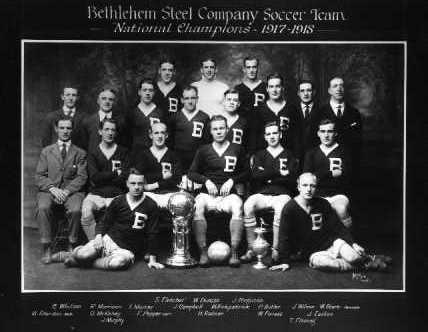
Even the actual glory days of American professional soccer, a few years in the 1920's when it seems the game had a chance, are buried beneath decades of apathy. Though there is something romantic about the Fall River Marksmen and Bethlehem Steel, the line was broken too early for any of it to resonate. We've settled for putting our romantic names on t-shirts.


England has romance in abundance. It oozes from the century or more of history most clubs have to their names, is buoyed by the ancient nature of England herself, and rings a special note with Americans who romanticize almost anything English anyway. American soccer, and specifically MLS, is the soccer equivalent of an Ikea dresser side-by-side with England's handcrafted Victorian chest. Which will the discerning choose?


Promotion and relegation - now there's a romantic concept. In theory, the perennial underdogs, hamstrung by small fan bases or lesser budgets, can reach the pinnacle of the sport in their country. It's Hoosiers, in soccer terms.


Practically speaking, it's nearly impossible to defer to romance in the way the sport operates in the U.S. The implementation of such a system now would be for romance's sake and romance's sake only; the game will not be served by a succession of dissolving clubs when the harsh realities of relegation hits. Those with money and a bit of interest in soccer may appreciate romance as an abstract concept, but they'd be loathe to accept it as part of their involvement in the game. Not now, when the lack of a reliable historical foundation means failure is conceivably just one demotion away.


So when will romance kick in? Or is American soccer always destined to pale in comparison, unable to create the type of magic we take for granted with baseball, American football, and even basketball (the relative newcomer of the pro sports group)? If England has a monopoly on common-language soccer romance, how many years will our little league need before it inspires the kind of wispy reflection that even the lowliest clubs in modern day England engender?


Accepting, supporting, and appreciating American soccer is unlike doing the same for leagues and clubs abroad whose tomes are packed with glorious victories from the distant past. It takes a clear recognition that we're not leaning on history, we're helping to write it; it's very possible that none of us will live to see the day Major League Soccer clubs cross the magical threshold into "institution." If the league lasts and grows and becomes a undeniable component the American sports fabric, it will still fail to be the Premier League, La Liga, Mexico's Primera, and scores of others we can see on our televisions week after week in terms of romantic appeal. MLS Cup 1996 has none of the cache of the FA Cup Final of 1948. If soccer fans need the romance of days gone by to become attached to a club, MLS is flat out of luck.


There's hope, though. Local bonds can trump the need for romance. Several clubs have proven that. New stadiums, ones the clubs can call their own and in which history can be written, help. More and more fans of the game are either forsaking the richer histories of clubs overseas for American teams they can see in person, or are adding the joy of live soccer and being a part of the creation of a legacy to their distant loyalties. If the right mindset can be found, this can be the best of both worlds.


Romance is intoxicating. History helps tell us what is important. American soccer suffers from a deficit of both.


The beauty of this seeming disadvantage is that it provides fans with something incredibly unique; the chance to be there in the beginning. There's a certain romance to that, after all.


Image source


But probably not the history you'd expect.


I'm an avowed history buff; if the television in my house isn't on Wow Wow Wubbzy, it's invariably on the History Channel, Discovery, or some other network that trades in retrospective programming. I eat the stuff up.


Soccer history, and particularly American soccer history, is always of keen interest. We've heard about 1950, we've seen the movie. We've heard about the NASL glory days, and Once in a Lifetime certainly captures some of the essence for those of us who weren't around. But there's another chapter of American soccer history that too often gets overlooked, a chapter that had every chance of ending with soccer as the biggest sport in America: the real heyday of American soccer, the 1920's.


And so I give you Brian Phillips and his Slate piece The Secret History of American Soccer.


Whatifs are fun, if ultimately pointless, and we wouldn't be human if we didn't imagine a world where soccer became the dominant sport in America ninety-odd years ago. Would the USA have won World Cups? Would we have the richest, most visible league in the world?


Maybe. But remember that the sport is what it is because history played out the way it did. If America had truly fallen in love with soccer in the 1920's, I'm not sure we'd be much better off. In fact, I'm almost certain I wouldn't be writing this blog, for example. That would be no good. No good at all.


Anyway, check out Brian's piece, learn a little something, and imagine what it might be like now if it hadn't gone all wrong then.


Stars, Stripes, and Style

Thursday, April 29, 2010 | View Comments
Maybe it's because I'm from Philadelphia, but I always get a bitter taste in my mouth whenever I hear or read the words "New Jersey." Or maybe it's because kit manufacturers have a history of messing about in order to make jerseys look just different enough that they can get fans to buy them. Either way, there's some Pavlovian stuff going on in my noggin.


In closely related news, Nike had their "look at the shirt you all knew about months ago, isn't it awesome?" party today. In case you haven't seen it, here it is:


Yeah, I hate it too. When Nike said it was going to be 100% recycled, they weren't lying. At least the away looks better: (clicky) It's not that I don't like the sash. I mean, I don't, but it's not the sash itself that makes the shirt look stupid. It's the grey on white color scheme. It looks like the kind of curtains stuffy old rich people put in their summer homes. According the the press filler, they were doing it as an homage to the 1950 World Cup team, which is why they decided to wheel out Walter Bahr for the occasion.


Now, looking at that failed abortion up there and at the legendary 1950 shirt (here) that it's supposed to be paying tribute to, you can see the difference. The 1950 shirt is simple, yet classy. Red, white, blue. Stick a badge on it, and we're good to go. It has a sash, but it's not nearly as silly looking as later be-sashed efforts. It manages to not be boring, while not being needlessly busy. Somehow with the current top, Nike have managed to produce a shirt that is not only boring, but stupid looking, too. Is there a point to the red bits near the end of the sleeves? The extra white and grey piping around the sash? This shirt isn't as much tribute to the 1950 shirt as it is the bastard love child of that jersey and the last US home shirt, when it seemed Nike had finally reconciled their misconception that the US flag is white, grey, and blue with the public's need for a shirt that doesn't look like crap.


I didn't like our last World Cup jersey, either, although that might be because this is my abiding memory of that tournament. And maybe that's the problem with US jerseys. It's hard to get attached to one because it changes so often, and because it keeps changing, there's no time for a truly American look to cement itself. All of the true classics, like Argentina, Brazil, or Holland, have been largely unchanged for decades. Instead, we've got a motley crew of dated shirts like this one, the infamous "denim stars" look from the 1994 World Cup, or this uninspiring effort from 1990.


For once, I'd like the USSF to force Nike to pick a single look and stick with that theme for an extended period. It would help bolster the senses of tradition and identity in the US soccer community. And stay away from the sashes, please?


MLS Is Officially Generational

Wednesday, January 27, 2010 | View Comments
Octavio Zambrano, Teal Bunbury, Alex Bunbury, Peter Vermes

The health of a sport often leans heavily on its longevity. The longer a game is around, the deeper its roots penetrate the culture it inhabits, creating long lasting connections that transcend generations.


No American professional sports league exploded into massive popularity overnight. Baseball, with the added advantage of being the only professional sport in the country at the turn of the 20th Century, slowly assumed it's perch as America's pastime over the course of decades. The NBA, as recently as thirty years ago, was a marginal sport struggling for live national television exposure. Even the country's undisputed sports king, the NFL, needed years to become the ubiquitous giant it is today.


Each and every one of these leagues benefited from the passage of time. As more and more people fell in love with them, they passed their interest and passion to their children. Fathers and sons going to games together might be sappy and over-romanticized, but it plays a role in the continued relevance of a sport.


MLS is no different, and only fifteen years into its existence is only now beginning to see the results of transferred passion. Finally, though, Major League Soccer has an example of the legacy of the league in a player; Teal Bunbury, drafted fourth overall by the Kansas City Wizards, is the first son of a former MLS player to come into the league.


Teal's father, Alex, also played for the Wizards back in 1999 and 2000, the last two years of a career that took him to England and Portugal. This link, made all the better by the potential the younger Bunbury possesses (Teal won this year's Hermann Award, annually give to the best collegiate player in the country), represents on the field what MLS is also now beginning to see in the stands.


American sports fans are intimately familiar with similar father-son player combos in other sports. The Griffeys, the Hulls, the Mannings; these are the "first families" of sports on this continent, families that connect an older generation to a newer, serving as touchstones that cement the cultural bonds sports have to our lives.


Teal Bunbury may or may not be a great player in MLS, and the career of his father in the league is hardly on the level of Archie Manning or Ken Griffey, Sr. for both accomplishments or longevity; but as long as Major League Soccer doesn't fade away like so many other American competitions, the Bunburys will surely be the just the first of many families to span the MLS generations.


For more on the Bunburys, read Mike Woitalla's piece at Soccer America


Raul Diaz Arce

J Hutcherson over at the US Soccer Players site posited something interesting today (even if I had a bit of trouble navigating a meandering post to the point); it's nearly impossible to create a club-defining system that will ensure long term success in MLS, and teams are best served to take a "win now" approach each season without any concern for distinctive style.


I think. I may be pulling more out of it than was intended, but this closing parry is the thrust of the piece:


"Like it or not, MLS is trending towards a short-run league. Maybe not to the extent of Mexico or South America, but enough to suggest that system building is no longer the smart move."


I think the question is worthy of some examination. Because MLS is a league of parity (not "parody"), it's difficult for any team to establish themselves as a consistent powerhouse; while clubs like the Revs and Earthquakes/Dynamo have put together solid runs of playoff appearances in one case and playoff appearances and championships in the other in recent years, their type of success is extremely difficult to capture and is actually the result of great coaching rather than any broader philosophy that will carry them through across regimes.


The one club that has managed to create an institutional personality, and the impetus for Hutcherson's post is DC United, who may actually be living off of a faded past. The club's reputation for a more attractive (for MLS anyway) short passing game and clever attacking soccer was built in the early years of the league, when the ability of United's leadership to find talent others couldn't led to multiple championships and the "Tradition" label they use today.


Curt Onalfo addressed that supposed stylistic tradition when discussing his role as United's new head coach:


Onalfo's aim is to play "beautiful, attacking, quick soccer," he said. "We want to play with style and send players forward -- that is what D.C. United has always been known for." (Washington Post)


But should that really be Onalfo's concern? For a club used to winning that has failed to make the playoffs each of the last two seasons, shouldn't Onalfo just concentrate on winning, tradition be damned? As Hutcherson suggests, attempting to create a grand plan that will enable to club to sustain success over a long period is a gargantuan task; wouldn't it better to simply focus on the here and now, ignore the pull of the United style, and build a winner no matter how the play looks?


My guess is that Onalfo is giving lip service to style. He knows his job is to win, he knows the fan base is desperate to see the team back in the playoffs, and he knows (I hope) that it doesn't really matter how that happens as long as it does. But as much as the pragmatic approach makes sense in a quick turnaround league like MLS (see: Galaxy, LA) something will be lost if United no longer at least tries to play the game the way for which they're known.


MLS needs clubs that posses a traditional style, an overriding character, or something they're "known for", no matter the players who line up for them year after year. A club's "style" builds a connection with fans and supporters who come to feel pride because of it that players often can't because of the transient nature of the game. MLS lacks those connections in many cases, both because the league is built to ensure every club is essentially the same, and because long term success (which I'm defining as "multiple championships") is so difficult to achieve. What good is style if it doesn't win you anything?


United fans must now hope that if Onalfo is serious about keeping up the club's tradition of pleasing-to-the-eye soccer, that doing so doesn't preclude them from winning. If Hutcherson is right, and short-runs are the way of MLS, than every club that hope to win a title is best served to put their rosters together with little to no regard for any kind of long-reaching system. Without those grand plans for consistent success, no club will be creating any type of transcendent identity.


For me, that's a little depressing, even if it is the reality of Major League Soccer.


Let me know what you make of all of this.


Pre-Match Gifts

Let's just get this over with and call 2010 "The Year of American Soccer History". Between club and country, things will all come together to bring about the revival of some old soccer memories, memories that make up a large portion of the history this country has with the beautiful game.


If you had told me six months ago that the two biggest things to happen to soccer in this backwater of the footballing world, the 1950 US upset of England and the heyday of big time club soccer in America, the North American Soccer League, would be cropping up again and at exactly the same time, I would have guffawed mightily. Sure, the US could somehow draw England in the World Cup, setting off mass hysteria among the American turncoats, English media, and the American public (both fan and non-fan) alike, but to think that someone would bring back a name that unfortunately represents an era of failed dreams and ephemeral relevancy, that would be too much. For both to happen in the shadow of a new year, a year with both a World Cup and the launch of the new league, that would be ridiculous.


And yet here we are. The United States has drawn England, just a few short weeks after a breakaway group of second division club owners announced that the NASL will return, albeit in a significantly different guise. Americans will no doubt be inundated with images, names, and stories from the sixties, seventies, and eighties, all in the name of remembering when North American club soccer meant something outside the borders of the US and Canada. The Cosmos name still resonates, years after Pele and Chinaglia hung up their spikes and a shady character named Peppe Pinton stole away with the team's trademark secured firmly between his greedy hands. Going back even further, we'll be swimming in the memories and lore of 1950, sure to be trotted out in the wake of the World Cup draw, when the greatest upset in the history of international soccer stunned the world. Plucky American kids from New York, St. Louis, and Philadelphia stepped onto the field with (most of) the best players that big, bad England had to offer, and stared them down to a 1-0 victory.


Two distinct memories, all dredged up in 2010. It's an American soccer renaissance of sorts, when millions of people for whom soccer has never mattered will learn for the first time that soccer does have a history here, even if it occurred in unfortunate fits and starts.


It's likely that all of it happened before you were either born or aware of the magic of the game, and for those of you that do remember the high tide of the NASL, you'll be calling on memories distinctly faded by the passage of time. That time doesn't diminish the importance of those memories, however, and first-hand (NASL) or not (1950), it's all a part of the fabric of the American game.

Pele Appreciation Day


Bring it on. I'm ready. An avowed history buff, I'm excited to learn so much more than I already know. I'm excited for the interviews and retrospectives that will inevitably come, and I'm hopeful that new aspects, minutiae almost forgotten because no one thought we would care, will be unearthed for all all of use to enjoy.


The confluence of events that bring us to this point is almost too perfect to comprehend. It was a frustrated second-division club owner making a phone call to one of his colleagues, setting off a snowball of dissatisfaction that led to rebellion. It was a ping-pong ball containing a slip of paper reading "United States" on it grabbed out of a bowl at the exactly right time, when the USA's former colonial master was waiting to learn its opponents. It's the global community preparing for the greatest sporting event in the world, a nice round sixty years after the US humbled England, while two countries with a complicated relationship bubble over with anticipation. It's the need for a "new" league moniker at a critical time in the history of second division soccer, when time is short and instant profile needed.


It's two circumstances, completely unrelated save for their connections to the past, happening in the waning days of 2009, months ahead of the events they portend; months that can be used to revive the past they to which they hearken back.


So if you don't know as much about American soccer history as you would like, or you're like me and just have a voracious appetite for more, 2010 should be a wonderful lesson.


If you're not into history, too bad; you're about to get a crash course. Appreciate as an American what we have, because while it's not as much as that of some other nations, it's rich in color, drama, and intrigue. And that's the foundation on which the future of soccer in the United States will be built.


Pele of New York Cosmos

The NASL is back!

Sorta.

Trademarks have been secured, an announcement has been made, and teams are lining up to get in. Everything is coming together for the new NASL, a league born out of the frustration a group of owners felt under their previous structure. The little matter of USSF sanctioning still hangs over their heads (my guess: it's coming shortly), but everything appears to be in line for a new dawn of second division soccer in the United States.


The reasons for choosing the NASL name are obvious. The built-in name recognition gives the TOA a head start on marketing. The history of the old NASL can be leveraged into a trendy retro-style selling point. The legacy of soccer in the United States and Canada isn't wide, but there is some depth to plumb, and the TOA owners have chosen to plumb it. Without much time at their disposal to get things moving, there was no reason not to go with the North American Soccer League moniker.


But there's danger here for both the new NASL and its (potential) fan base. This league will be "NASL" in name only; there won't be any world famous stars, aging or otherwise, there won't be any 60,000+ sellouts, and there won't be any new American fascination with a funny foreign game played by Italians, Germans, and Brazilians. The past is the past and should stay that way; for everything the TOA gains by appropriating the NASL name, there's the chance that by looking back to a league that failed twenty five years ago they'll fail to put enough emphasis on moving forward.


While some of the teams in the TOA/NASL have established fan bases, others will need a little help to convince people to come out to the park. The curiosity factor will only last for so long, and the new NASL good will need more to draw consistent crowds in places like Baltimore, Tampa, and St. Louis; for the long term, it will about the product on the field, the passion in the stands, and the legitimacy of second division soccer. Recalling past glories, defunct clubs, and the kitschy logos and nicknames of the old NASL won't do the new NASL any good if the call back to history isn't augmented by a very real focus on the modern soccer landscape in the United States.


In a word, the new NASL can't become a retrospective of the old NASL.


Let's hope those team trademarks secured for dead clubs like the Los Angeles Aztecs, Baltimore Bays, and Boston Minutemen are just a way to collect NASL legacy items for possible "throwback" games, and not an indication that the TOA are actually trying to recreate the original NASL.


We definitely don't need one-on-one shootouts and 35-yard offside lines.


And for all of you that remember the original NASL fondly and would like to take this opportunity to stroll down memory lane, have at it. Our soccer history, especially one as colorful as American soccer had from '68-'84, should be celebrated and revived periodically. Just remember as you opine about Soccer Bowl '79 and the glories of free-spending insanity that this NASL has very little to do with that NASL.


In 2010, second division soccer will be better off if those involved in "bringing back" the North American Soccer League remember that little fact.


Deep Cuts: Scrubs or Shin Guards?

Wednesday, September 30, 2009 | View Comments
U-17 MLS Youth Cup Tournament Final

The condition of professional soccer in the United States is such that the when presented with a choice between playing the game on its highest level here or hanging up the boots and focusing on a job in the "real world" is not as simple as it should be.

For millions of young athletes in America, the dream of a professional career rises above and surpasses any other; it's true for baseball, American football, basketball, and hockey. To reach the pinnacle of those sports and have a chance to play on big stages in front of thousands of people all the while getting paid (very well) to do so is a hard proposition to pass up. But soccer doesn't fit that dream path, both because the game is an afterthought at best in the US, and because player salaries lag miles behind those in major American sports leagues.

Three college soccer players are faced with the dilemma, and the Indiana Daily Student describes their struggle; stick it out and become professional footballers, or pass on what will probably be a hard-scrabble existence to follow the alternate dream of becoming a doctor. Here's to the hope that one day, their choice won't be so difficult.

  • From the capital city of New York comes a remembrance of the New York Eagles, Albany's American Soccer League representative way back in 1979. Interesting notes from this piece include the national makeup of the Eagles' squad, the internal conflict that occurred because of it, and the absolute reverence that the author holds for the scoring hero of the team, Billy Boljevic. With the history of American soccer being littered with failed teams and short-lived clubs, there are bound to be thousands of stories like this one. Let's hope thirty years from now, people are remembering the 2009 season for teams that are still alive and thriving.


  • Here's peek at one fan's experience this summer, and the stressful nature of being a US National Team supporter in a country where you're simply bound to be outnumbered by supporters of the opposition when attending a match. Even as more Americans pick up the game and become fans of the national team, there's not likely to be a break in the live supporter numbers any time soon. Immigrants, especially those from Latin America, are simply more rabid about their support in much greater numbers than Americans; this means that although there might be enough Yank fans to at least equal the number of "away" supporters, they simply don't snap up tickets as quickly.


Deep Cuts appears daily and is an attempt to bring you soccer links from off the beaten path or of particular interest. If you come across something you think would make a good Deep Cut, please send it along to matchfitusa@gmail.com.


The Character of Clubs in MLS

Thursday, September 17, 2009 | View Comments
Boca Juniors v Etoile Sahel --- FIFA Club World Cup 2007 Semi Final

Around the world, as soccer/football/futbol took hold in country after country, clubs sprung up in an organic and spontaneous fashion. Over time, these clubs sometimes took on the character of their communities, a particular socio-economic group, or in a few cases, a political party or viewpoint. This phenomena was often the result of two or more clubs calling the same locale (or same stadium) home, enabling fans and supporters to push the image of their club in a certain direction based on their own collective identity while the other local team naturally assumed the opposite character.

Soccer tends to lend itself to this concept, just as it does with supporters groups (unknown in the US outside of soccer) in a way that other traditional American sports don't; while Red Sox and Yankees fans are deeply attached to their clubs, there's no significant organization in their respective fan bases. The concept of American individuality may be at play, keeping fans from feeling the need to coordinate their support beyond anything more than call-and-response cheers. Soccer fans in the US, despite the prevailing culture here, have adopted, co-opted, and organically spawned many of the natural accoutrement that seems to follow the game around the world; yet the concept of a singular club "character" seemingly remains outside the realm of what is possible.

American sports, in which the franchise model dominated nearly from the outset and multiple teams in one city became the exception rather than the rule (owners aren't big fans of competition), has never followed the "character" path. While certain teams could be said to have taken on the character of their city, as the Steelers have with the blue collar image of Pittsburgh, for example, the two concepts are generally unconnected in the United States. Even in those cities that boast two teams in a given sport, the battle lines are more likely to be drawn geographically (i.e., White Sox and Cubs) without regard to the type of the communities involved, rather than along the more subjective lines of "character".

Football - Manchester United v Celtic UEFA Champions League Group Stage Matchday Three Group E

That American mindset, while not an obstacle to things like supporters groups and sustained singing during matches, is a serious impediment to any club taking on specific character, especially by a "natural" process. The size of the country, the youth of the top-tier league, and the slick corporate marketing of the modern age have swept away much of possibilities. As we've seen in recent years, even attempts to force a particular complexion upon a team, as Chivas USA tried to do with the Latin community in Los Angeles, is difficult if not impossible.

There's no reason to believe that MLS clubs need specific characters, of course, though the romantic notion of such a thing probably appeals to certain segments of soccer fans. One of the game's greatest assets in the United States is its unifying nature; for any team to take a specific image, or to become the chosen club of a socio-economic or ethnic group exclusively, would be counter to that nature. Clubs that are linked to the working class, political factions, or any other exclusionary groups took on those personalities long ago; in the modern world of mass communication and rapid exchange of ideas, that kind of insular thinking is less likely to take hold.

If the old world notion of identifying a club with a particular type of fan base can't take hold in the US, should we even be concerned with it? Again, the romantic portion of the soccer audience would probably prefer American clubs take on at least a few characteristics of their environment; if MLS teams are clones of each other across the board, with little to distinguish them from each other besides the uniform, how far does their appeal extend? There's enough homogeneity in the league as it is, with the single-entity structure, salary constraints, and foreign player restrictions creating parity to go along with the plug-and-play nature of the league.

Club character, even if it doesn't go as far as a direct identification with politics or class, can, and probably will, eventually work its way into American soccer. Several teams have begun to create connections with their communities that go beyond marketing, and even more will do so as time goes on. This is a more subjective type of connection, one that leads teams to become embodiments of their city's background and culture, as the aforementioned Steelers have with Pittsburgh.

Philadelphia Union Press Conference

And there lies the determinant: Time. MLS clubs are simply too young to have taken on the color and flavor of their hometowns, and only the span of years will decide if they ever do. Will the Red Bulls evolve into the flashy, attractive playing team the New York surely craves? Will the Fire grow into a club that represents the blue collar ethos of Chicago? What type of club will Philadelphia be, and will it fit the gritty nature of that city?

Part of the fun of watching soccer come of age in the United States is in this very area. As more fans and cities come on board, the potential for clubs to weave themselves into the fabric of their communities gets bigger by the year; with so many sports that have lost touch with their fans in the American marketplace due to over-coporatization and inordinate ticket prices, soccer is perfectly positioned to fill a void in the sports fan's soul.


The New York Red Bulls are bad – pitifully, blatantly, and almost amusingly bad. They have the league’s leakiest defence, the most incompetent attack, an astonishingly appalling road record in which they have avoided defeat just once... the list goes on (and on).

Yet their ineptitude, their complete inadequacy, is set to be something of a story as the season draws to a close. While the majority of the league’s attention will be rightly focused on the race for the play-offs, there will be more than a few keeping an eye on the action at the bottom. Defeat following defeat following defeat... It’s become something to be sure of, something certain. In a league as open and competitive as the MLS the NYRB’s plight is a comfort.

Their crapness is also in danger of becoming historic.

New York’s stumble towards the Wooden Spoon is also set to be a stumble towards MLS history of the worst kind. They are on course, with just 10 points thus far, to record the worst season in MLS history – a record (14 points) held by the 2001 Tampa Bay Mutiny side, in a season always to be asterixed and all but invalidated by the tragic events in September that cut short the regular season to 26/27 games.

The Red Bulls need to gain four points from their final eight games in order to avoid a superlative season of failure. To put that into perspective – the team is currently suffering through a period in which they have gained just 1 point from a possible 36. They have not won a game since May. Gaining even another two or three points looks almost beyond reach.

All this makes Sunday’s game with Dallas strangely compelling. It’s a nothing game, really. Dallas, even with a couple of games in hand on some teams, surely can’t harbour realistic aims of reaching the post-season, while NYRB gave up on that dream months ago. Yet this is one of the few remaining games in which New York has any chance of winning. Dallas is very poor on the road (1-7-2), while all of NYRB’s wins (and by “all” I mean “two”) have come at home. Intruiging stuff. While the match line-up itself (NYRB vs. FC Dallas) might not exactly set the heart racing, the sub-plot (NYRB vs. History) might just heat up the prospect.

Derby County

Sports - December 08, 2007


Chelsea beat them 6-1. Arsenal thrashed them 6-2. Aston Villa humped them 6-0. West Ham strolled to a 5-0 win. Even Reading squashed them in a 4-0 rout. And these were just their home defeats. Yes, Derby’s 2007-2008 Premier League season was one to be forgotten. A pity, then, that it won’t be, as it broke almost all of the more unenviable EPL records. And then what happened? Derby were relegated to the Championship, in last place, with a solitary win. Five games into the next season they won their first game in 360 days.

San Marino National Team

Football - Northern Ireland v San Marino 2010 World Cup Qualifying European Zone


Losing 4-0 to Switzerland in their first competitive game in 1990, the San Marino national side could have been excused for feeling somewhat doubtful about their chances in qualifying for the European Championships two years later. And then what happened? They didn’t qualify, nor did they qualify for any of the next eight international tournaments since then. I think the team’s fortunes can be summed up by the fact that the greatest result in their history was a 1-0 win over Liechtenstein. Five years ago. In a friendly.

East Stirlingshire FC


Last but most certainly least – Scotland’s whipping boys. Perpetually bottom of Scotland’s lowest division, the team achieved British infamy during the 2003-2004 season, when they gained just 8 points (from a possible total of 108). And then what happened? After a season of such epic failure (over 100 goals conceded!) a best-selling book entitled “A season with Britain’s worst team” was published while, strangely, a 6,000-member Norwegian fan club was established. The team finished bottom for another four years before, unbelievably, becoming good. In 2009 they reached the play-offs. There’s hope for NYRB yet.


The rules of soccer (or football, or more specifically "association football") are, as in every sport, ever changing and evolving. Substitutions, the offside rule, methods for breaking ties: over time, the organizations (first the FA, then the International Football Association Board) governing the sport have made changes as the need arose. Many of those rules, the ones so ubiquitous in the sport today, are taken for granted; to wonder where they originated, or how the game itself started is beyond the concern of most fans.


    KKTC Bahis Siteleri, Online Bahis

    Legal


    Privacy Policy