


- Jason Davis
America's two promising striker prospects are taking their friendly rivalry to Twitter. In the lead up to Saturday's match between Sporting Kansas City and the Red Bulls, Teal Bunbury and Juan Agudelo have a bet: the player that gets the most followers by game time will be forced to wear the jersey of the other and document it for all of Twitterdom to see.
Showing posts with label Twitter. Show all posts
Showing posts with label Twitter. Show all posts

- Jason Davis
It seems that in the interest of improving league broadcasts, Major League Soccer's broadcasting department has set up a Twitter account specifically for TV-related feedback. Under the name @MLSonTV, the account appeared yesterday with a call for any and all opinions fans might have on the way the league is presented on the magic box - from announcers to the use of replay.
It seems that in the interest of improving league broadcasts, Major League Soccer's broadcasting department has set up a Twitter account specifically for TV-related feedback. Under the name @MLSonTV, the account appeared yesterday with a call for any and all opinions fans might have on the way the league is presented on the magic box - from announcers to the use of replay.

From Dave of Sounder at Heart comes a novel concept: clubs should be promoting cup competitions that actually matter over meaningless friendlies that do nothing but stretch resources and pack already bursting schedules.
The Sounders lost to Celtic yesterday, in part because keeper Terry Boss was sent off for a foul on Celtic forward Georgios Samaras. Samaras actually managed to put the ball in the net despite the foul, making the decision by referee Paul Ward to award a penalty and red card to Boss an odd one. It was a friendly after all.
It's unfortunate that the entertainment value of the match was destroyed by Ward, and it highlights the problem Dave is attempting to bring attention to. Sounders fans pay for these friendlies as part of their season ticket package, while matches in non-league competitions like the CONCACAF Champions League and US Open Cup are left out and shuffled to auxiliary facilities that hold 6,000 fans. It's encouraging that 45,000 Seattlites showed up to watch Scotland's legendary club go up against their beloved Sounders, but it's disheartening that so much more importance is given to exhibitions than to games that can lead to the club winning trophies.
The reality of the matter is that these friendlies bring in money. MLS teams are hardly doing so well that they can turn their nose up at the case when clubs like Celtic and Man United are on annual summer tours and would like to stop by. While the Sounders can draw impressively no matter the opponent, other clubs need the name draw to bring in the masses and augment their bottom lines. It's not a matter of profit in most cases, it's a matter of offsetting losses.
Dave is suggesting this for everyone, though his obvious concern is the Sounders. He happens to support a club that has no excuses when it comes to promoting meaningful matches over friendlies. The Sounders don't need the name of Celtic to put 30k+ in Qwest Field.
By including CCL and Open Cup tickets in a season ticket package, the club gives the fans a reason to go to those matches. By not including them, the club is making it imminently clear that the games hardly matter, that the tournaments are extraneous the rest of the season, and that there's little reason for their most committed fans to attend. How can we expect fans to care about cup competitions when the club sends the message that they're not important?
There are practical reasons for MLS clubs to invite teams with massive fan bases and big names to the States for a tour of friendlies; but the longer theses games are given precedence over tournaments that should mean something, the harder it will be to build interest in those tournaments. Dave thinks clubs should start giving the fans a reason to pay attention.
This is a first step. For me, the end game is to no longer need summer friendlies with third stringers from Tottenham and experimental sides from Celtic to makes ends meet. That may not be possible for the foreseeable future. and even if these games always happen, Dave's point stands: promote competitions that matter, include them in the season ticket package, and leave the friendlies to the tourists.
I'm fully behind #trophiesnotfriendlies.

Jozy Altidore sprained his ankle in training yesterday. His status is listed as day-to-day, and I'm guessing the young striker won't be suiting up against Australia on Saturday.
This, by itself, is pretty big news on the eve of the World Cup. Any injury, even a "mild" one, is scary when there are only twenty-three men in country, game plans are being laid out for crucial group openers in training, and any loss, much less one of front line talent, might mean going into the fire with a hole in your suit. Jozy is important. This is not good.
The situation was exasperated, at least in the minds of the fans, when ESPN decided to send out their Twitter and SMS update (which I received while out to lunch - not like the local ESPNRadio station was going to report it) with the word "hospitalized" in the text.
Wait, hospitalized? Jozy sprained an ankle and was hospitalized? Who ever heard of such a thing? WORLD CUP OVER!
Only, "hospitalized" really meant "had X-Rays taken at the hospital". This, I can understand. Sprained ankles, especially nine days before the tournament begins, are nothing to take lightly. Jozy reportedly picked up the injury yesterday (Wednesday); so either he went to the hospital shortly after it happened and had X-Rays done to make sure it wasn't more serious than it seemed, or he went today after sleeping on it. The latter seems worse than the former, but neither of them constitute his being "hospitalized".
The X-Rays were negative, by the way.
And so ESPN had an unfortunate choice of word (or flat out failed), gave the American soccer fan base on Twitter a collective heart attack, and continues their reign of terror over our game (I'm kidding).
Just please be careful next time, World Wide Leader. Our hearts can't take it.
I'm off to look for a silver lining. Nine days with no use and proper treatment of a mild sprain might have Jozy just ready enough to play on June 12th. Cross your damn fingers.
I forgot to include this when I posted earlier. Courtesy of Ben Rycroft (Follow him on Twitter) of It's Called Football, a handy meter for all of us Yanks panicking over Jozy's ankle:

Head go boom.
I find myself regularly saying something like "You'll know soccer is big in American when..." with various endings to the statement. Some of them relate to the media, others to the general public's view of soccer, and every now and then I'll have one specifically on MLS or the USMNT.
Why I never thought to write a post with all of the "You'll know it when" thoughts, I have no idea. But here I am, so let's do this.
All of these, if and when they happen, will be indicators that soccer, our league, and our National Team are at a previously unreached level. Or they're just mildly amusing.
I put this out on Twitter as well, so I'm including responses from there with proper credit given.
You'll know soccer is in America big when...
...MLS players other than David Beckham are hounded by TMZ (this is stolen directly from @jrodius).
...Sportscenter anchors narrate highlights without any hint of snarkiness.
...those same guys avoid hockey terms when talking about soccer.
...sports talk radio hosts discuss soccer stories regularly.
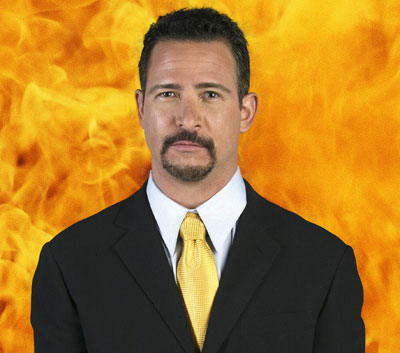
...Jim Rome's head explodes because of the previous.
...the ranks of the biggest sports star in the US include Europeans who aren't over 30.
...rappers are sporting the latest soccer jerseys.
...MLS no longer needs single-entity.
...Dan Shaughnessy writes a book on the Revs called "Curse of the Bachelor" (courtesy of Ginge)
...Google sponsors an MLS club (@wvhooligan)
...people refer to it as football. (@mellows)
...it's big in Canada. (@RWhittall)
...high schools start focusing more on Soccer in the athletics than Football. (@Bruno43)
...an Italian shuns the Azzuri to play for the USMNT. (@Eric_Howell)
...Budweiser redoes its age-old Bud Bowl for the MLS Cup, renaming it the Bud Cup. (@stoehrst)
...'Arry Redknapp makes an MLS club financially implode. (@stoehrst again)
...the national obesity rate goes down by a few percentage points. (@SoccerMontreal)
...there is a goal setup on the white house lawn. (@jasonseas) (apparently this has happened at least once)
...Americans decide to watch the champions league final instead of the Yankees-Mets game. (@mattpricewc2010)
...you can see more than one MLS game a week on basic cable. (@benuski)
...fans are making videos like this about MLS teams.
...Americans in top 5 European leagues are getting left off USMNT rosters.
...the MLS draft moves to Radio City Music Hall. (@jasongatties)
...our best centerback can actually get paid to play in Italy. (@MHaaskivi)
...there's a daily soccer radio show hosted by people with American accents.
...atheletes like Kobe Bryant, Lebron James and Michael Vick choose it as a career. (@jrodius)
...American kids dream about the MLS Cup as much as they do the Super Bowl or World Series.
...the average MLS salary reaches mid-six figures.
I could do this all day, and Twitter was certainly blowing up with responses. Can't take them all though, right? Let's go people...give it your best shot.

Public relations is part of any collective bargaining process. The two sides do their best to "control the message", either presenting their position in an effort to sway the public's opinion, or in the case of the MLS owners, say nothing at all.
Yesterday's sudden wave of noise from the Players was notable for it's ratcheting up of the rhetoric. Out of nowhere, it seemed, the players rattled their sabers, letting anyone who would listen know that the League is holding things back. Playing the victims, as they've done throughout, they carefully and methodically chose the moment to let fly with a controlled message.
It started with two prominent soccer writers (Ives Galarcep and Jeff Carlisle) posting stories on the matter, with direct quotes from Pat Onstad in one case and Joe Cannon in the other. It continued on Twitter and Facebook, where more than a few players drew attention to the aforementioned stories as well another piece, written by Richard Snowden at Soccer365, that frankly borders on propaganda. Sprinkling in other items to better turn fans to their side, notable players used social media as a tool in their campaign.

(Link goes to Snowden's Soccer365 piece)
Using calculated, coordinated, classic PR (or so it would seem to me; I have no public relations experience), the Players launched an attack on the League, and did so on a Friday evening the week before the negotiating deadline during the slowest part of the news cycle. That's clearly no coincidence, and indicates that the players who let fly with opinions (quotes in stories), links (on Twitter), and inflammatory statements did so because they were directed to.

(Cannon also linked to Snowden's piece)
The Players have failed, by some people's estimation, to get their message out properly. While many of us that scan blogs and soccer news sites daily may know where they stand and for what they're looking, it's probable that the interested-yet-less-connected MLS fan doesn't really understand their position. Yesterday was a clear effort to rectify that situation at a crucial time in the negotiating process. Another extension is unlikely if not impossible; actual play begins very shortly (starting with Columbus' series with Toluca in the CONCACAF Champions League).
As for Snowden and his latest salvo at Soccer365, it loses some of its thunder in light of his past efforts. After Snowden wrote a similarly toned piece call "This System of a Down Must Go", in which he made a factual error for which he was subsequently called out, I invited him on the American Soccer Show to discuss it. Perhaps because of the harsh reaction he received, he pulled out of the interview, even indicating to me that he may not write about soccer again.
None of this, of course, means that the Players are being intentionally misleading, or "spinning" things to their side unjustifiably; if they saw the need to fire a volley of PR on Friday because they want to gain leverage against the more powerful (in negotiating terms) owners, then more power to them. The way I see it, they'll need all the public opinion help they can muster to get even a few concessions from the League.
A work stoppage could be coming, and it could be in the form of a players' strike, as they've told Galarcep, Carlisle, and the Twitter and Facebook-following faithful. Or, this could be just another effort to turn the tide as much as they can before they head down the home stretch to a new CBA that they'll accept whether they're granted guaranteed contracts and free agency or not.
I leave you with this, from the Twitter feed of Steve Goff of the Washington Post. Unattributed (which is notable), it either reads as blustery nonsense or a true indication that the world is going to end (i.e., there's going to be a work stoppage):


Charlie Davies, just over four months after the horrific accident that nearly ended his life, finally had his last surgical procedure related to his injuries, on his left elbow.
Davies shared the news on Twitter today, showing off a wicked scar while thanking the fans for the support they've given him.
Per Ives Galarcep's ESPN piece on Davies just two weeks ago, the elbow surgery is the last hurdle Davies' faces before he is back in training with his club side, Sochaux. After a week or so to recover, he plans to be back in France. "Amazing" doesn't begin to describe it.
A return to training is the precursor to an actual return to the field, and though Sochaux will surely work Davies into the fold slowly and cautiously, there's little reason to doubt that he'll be making substitute appearances in Ligue 1 by his target date of April. I suspect that Sochaux's match whenever Charlie is finally back in the squad will the be most watched Ligue 1 match by Americans, ever. Davies is that important to the USMNT, his story is that compelling to all soccer fans, and his resolve is that inspiring to everyone that sees it.
As the World Cup slowly approaches, US fans have to be both anxious for it to start and hopeful that time goes by slowly for Davies. Every passing day is one less for CD9 to train, and not matter how intent he is on returning to full strength sooner rather than later, only time can help him get back his old swagger. The United States doesn't just need Charlie Davies playing, it needs Charlie Davies playing and scoring, fully in charge of himself, his body, and his talent.
Charlie may fade from the general soccer news for a bit while he pushes towards April and his club return. We'll surely see a note when he heads to France, and may even hear a training report or two when he gets there. But it won't be until he steps onto a field for a match in full kit that we'll really be able to let our excitement run wild.
I can't wait.

Prairie Rose and Jimmy Conrad
While soccer is ever-increasing in popularity in the United States, the traditional game of record, and the one that holds an equivalent place in the cultural identity of the country as "football" does in England, is baseball.
Whether you love it or hate it, it's hard to argue that the history of professional baseball is not over-romanticized; everything was better "back when" (never mind that little problem of latent racism). Times were simpler, the money was smaller, the games meant more, and the players were just doing a job that happened to invoke the passionate fandom of their communities. The passage of time, the lack of widespread television coverage, and the biased judgments of those who were there are all elements in these "Golden Age" characterizations.
One romanticized notion that I've heard throughout my life, particularly in relation to old-time baseball's most romanticized team, the Brooklyn Dodgers, was that baseball was better when the players were approachable, neighborhood guys. Until the big money of the modern age, baseball players lived in the communities in which they played; for Dodgers fans, part of the love they had for their team came from that "regular guy" status the players carried.
As an example, here is an excerpt from the transcript of an NPR piece titled "When 'Next Year' Arrived for Dodger Fans":
Mr. BEN CARRAGIE (Brooklyn, New York, Resident): "Pee Wee lived on 97th, and my aunt owned a liquor store, and he used to come out. A couple of Sundays I used to go and see him--I was about 10 or 11 years old--and he'd say hello to you, you know? He'd wave over when he was going downstairs. The Dodgers were family because they lived in Brooklyn. You know, we loved them dearly."
This type of situation happened all over the country in the first and middle part of the century. My own great-uncle used to tell stories of going to the movies with Philadelphia A's slugger Jimmie Foxx in the 1930s. These players were common folk with famous jobs, not untouchable mega-stars living sheltered lives.
I'm almost certain, without looking for sources, that English football has similar stories from their own "Golden Age", when the game was working class and local.
Money and media have changed all that. In the modern world, money has come to represent value, and not just in financial terms. It seems clear that MLS gets less respect because its players are "underpaid" by modern sports standards; for some American soccer fans, the extreme disparity between the salaries of Europe's biggest stars and the those in MLS makes the domestic league immediately less attractive. For the average American sports fan, for whom soccer is not entirely distasteful, the same applies; how can Major League Soccer be any good when the money its players make is almost nothing compared to the astronomical wages being paid in the NFL, NBA, and Major League Baseball?
It's unfortunate really, especially because MLS players are generally approachable, generally accessible, and generally willing to interact with their fans in ways that athletes from America's biggest sports never would. Passionate MLS fans know this from personal experience; there are fans across the country who wouldn't be out of line calling certain local players their "friends".
Not everyone wishes for days gone by when professional athletes were just regular joes, guys who if you said hello to them walking down the street they'd stop and shake your hand. For some, the riches and exalted status that accompanies big time sports fame is preferable to our heroes being too much like us. But MLS is different, and embodies a culture at odds with the modern sports world; while Alex Rodriguez is chased by paparazzi and protected by hired muscle, America's best soccer players are barely noticed, left to go about their daily lives as so many of us do.
But that also makes them unique. Would Major League Soccer be better off with "overpaid" stars, multimillionaire journeymen, and an average salary closer to seven figures than five? Probably. It would certainly help with the league's credibility, and would help to draw more attention from a resistant majority. Certainly something would be lost, though, and I wonder if MLS fans would actually be better off if their league and the players in it was no longer a unique collection of regular guys but a monstrous cash-rich behemoth like so many other leagues.
Perhaps it's best to make no judgments; what's different, and idealized by some, isn't always better. Like Brooklyn and its Dodgers in the 1950s, MLS and its fans in the 21st Century are likely living through an evolutionary phase that will fade away with time.
Besides, things aren't exactly comparable; our age is more transient, more spread out, and less provincial than ever before. Where Flatbush was an insular community in which the Dodger players both lived and worked and their fans might see them grocery shopping, MLS communities are more concept than reality. The digital age has created a different type of community, one that involves immediate communication across vast distances.

Stuart Holden and fan, from his Twitter feed
Twitter, Facebook, blogs, etc., have become our virtual Flatbush, where MLS players (who you still might see out somewhere) are available for a chat to discuss the news of the day or greater soccer world. In the words of Prairie Rose Clayton, American soccer's most famous banner-making superfan:
"American soccer's a well-networked community, and there's a pretty good case to be made that the internet is our neighborhood. It's also no great secret that every single thing the fans joke, gossip, and complain about, the players do, too, as illustrated by any given player who's ever written a blog, particularly one where he talks to his coworkers--Jimmy Conrad, I'm looking in your direction.
So, say, you follow most of the MLS and/or yank abroad guys on twitter, you get to see Twellman complaining about whatever's on SportsCenter that afternoon, or Andy Williams talking about his wife's fight with cancer right after he's just been talking smack to Esky about a video game. Edu, Jozy, and Beas are spending their days off making yo mama so fat jokes at one another. Joe Cannon laments about not getting a date, Brad Knighton's stuck in traffic on I-95, Kei Kamara's eating burritos and watching Heroes. You log into Facebook and get to see Holden or Feilhaber posting questionable party photos just like any other 20something. You wish some player a happy birthday, and he thanks you, even if he may not know you in real life. You start peppering them with stupid questions, they reply with stupid answers. They're all doing the same stuff as us jerks in the cheap seats."
Would all of that disappear if salaries grew and players become more like their big time sports contemporaries? I honestly don't know. Perhaps this is a soccer thing more than a money thing. Maybe we'll always have players who can relate to the fans. Maybe not.
If it's not a soccer thing, and one day we do have megastars populating our domestic soccer league, separated from their fans by money and fame, I'm guessing we'll look back on these halcyon days and romanticize them, just as all of those baseball historians like to do.

Only in the modern world where footballers regularly share their thoughts on Twitter can so much of a player's future be tied to a throw away comment.
If you blinked you missed it; Freddy Adu, he of the cancelled Beleneses loan and uncertain next destination, let it be known that he has a decision to make before fueling the rumor mill by following up with a whimsical shout to his friends in Greece (Eddie Johnson) and England (Jozy Altidore).
The tweet in question, which amounted to "Hull or Aris?" and has since been deleted, become fodder for on at least one well-known American soccer blog, backed up by reports out of England that Hull is indeed looking at the young American. For what it's worth, reports linking Adu to Aris also preceded his tweet.
Transfer rumors are notoriously unreliable, and there's no reason to believe that these are any different; even if both clubs mentioned are legitimately interested in Adu, boiling his choice down to just those two clubs would be premature. Believing Adu's tweet to be a joke and the speculation to be spurious, I tweeted my assessment. It was only a short time later that I received a reply from Adu's twitter account (we can only assume it was Adu himself that sent it) saying "smart man". That message has also been deleted.
Either Adu was backtracking after making a mistake with the first tweet, or I was correct in my view.
As for why those message are now gone, I can only assume that either Adu himself thought better of them being in the public domain while his status is in question, or his agent directed him to remove them for the same reason.

It's semifinal time in the Twitterverse Players League. The winner of these two matches will head to the finals, where they'll have a chance to win the title of American's favorite soccer Twitter personality.
Spread the word on the voting by Tweeting out the follwing message:
It's semifinal time! Help choose America's favorite Twittering footballer! http://ow.ly/yzEI #TPL


Eight men remain in the quest to find American favorite soccer Twitter personality.
Below are the four quarterfinal matches. Don't forget to vote in every one!
Tweet out this message to spread the word on the tournament and to enter yourself in a drawing for great prizes from Ruffneck Scarves and Setanta:
Help choose America's favorite soccer Twitter personality! VOTE HERE! http://ow.ly/wyz8 #TPL
Follow Ginge (GTTF) and Jason (MFUSA) for regular updates on the competition.
Voting for this round runs from Monday, October 26th through Friday October 30th.
Jason and Zach review the Round of 16 in the TPL, address a controversy, and look forward to the quarterfinals. The search for America's Favorite Soccer Twitter Personality continues...
DOWNLOAD THE REVIEW SHOW
The Twitterverse Players League has moved to the knockout rounds!
Below are the eight Round of 16 matches. Only one player can advance to the quarterfinals from each head-to-head battle, so be sure to help your favorite Twitter footballer get through!
Help spread the word on the search to find American's favorite soccer Twitter personality by tweeting the link to the voting page, using the #TPL hashtag.
Copy and paste this suggested Tweet:
Help choose America's favorite soccer Twitter personality! Vote here! http://ow.ly/v7V4 #TPL
Don't forget to vote in every match.
VOTING FOR THIS ROUND RUNS FROM MONDAY, OCTOBER 19TH TO FRIDAY, OCTOBER 23RD
LIVE RESULTS SHOW TONIGHT 9PM EASTERN MFUSA USTREAM CHANNEL
The second set of groups is headed to the vote; jump in now and assure your guy gets through to the knockout round.
Voting for these groups will run from today, Monday October 12th through Friday October 16th.
Tweet the link to the voting page with the #TPL hashtag and you'll be entered into the prize drawing to be held at the conclusion of the group stage.
If you need a tweet to send out, just copy and paste this one:
Help choose America's favorite soccer Twitter personality! Vote here! http://ow.ly/tV8O #TPL
If you need a primer on the TPL, go here.
The search for America's favorite soccer Twitter personality continues. Remember, the top two in each group go through, and Round of 16 seeding will be determined by percentage of the vote earned, so KEEP VOTING AND SPREADING THE WORD!
VOTING WILL CLOSE AT 5PM ON TONIGHT, OCTOBER 16TH! LIVE GROUP REVIEW/KNOCKOUT DRAW SHOW AT 9PM!
The first set of groups is headed to the vote; jump in now and assure your guy gets through to the knockout round.
Voting for these groups will run from today, Monday October 5th to Friday October 9th.
Tweet the link to the voting page with the #TPL hashtag and you'll be entered into the prize drawing to be held at the conclusion of the group stage.
If you need a primer on the TPL, go here.
The search for America's favorite soccer Twitter personality is close to getting its first knockout round qualifiers. Remember, the top two in each group go through, and Round of 16 seeding will be determined by highest percentage, so KEEP VOTING AND SPREADING THE WORD!
Here are the Twitterverse Players League groups, A through H, after Friday night's draw. If you want to listen to the recorded audio of the draw, the podcast is available for download by clicking here.
 |  |  |  |
GROUP B
 |  |  |  |
GROUP C
 |  |  |  |
GROUP D
 |  |  |  |
GROUP E
 |  |  |  |
GROUP F
 |  |  |  |
GROUP G
 |  |  |  |
GROUP H
 |  |  |  |
Voting begins Monday, October 5th, with groups A through D. Spread the word through Twitter, making sure to use the #TPL hashtag to enter the prize drawing.


